
Energy Switch
Season 9
202610 episodes
Energy Switch brings together two renowned experts from government, NGOs, academia and industry, with differing perspectives on important energy and climate topics. Hosted by renowned global energy expert, Dr. Scott Tinker.
Episode 1
Middle East Energy
Oct 6, 202627m
The Middle East produces one-third of the world’s oil, giving it an oversized influence on the global economy, as we’ve seen recently. But wealthy oil exporters are beginning to diversify beyond oil to future-proof their economies -- with global implications. With Dr. Carole Nakhle, CEO of Crystol Energy, and Dr. Jim Krane of Rice University’s Baker Institute.
Episode 2
Forests Store Carbon
Oct 13, 202627m
Plants absorb one-quarter of human emitted CO2 each year. Trees and forests do this through photosynthesis, storing carbon in wood and leaves, and returning it to the soil through their roots. While still shrinking in the tropics, forests are expanding in the Northern hemisphere, often through reforestation programs. We discuss with forest ecologists Dr. Sara Keubbing and Dr. William Anderegg.
Episode 3
Arctic Energy
Oct 20, 202627m
The arctic provides 10% of the world’s oil and 25% of its gas, but new production may be costly and environmentally risky. Arctic nations are turning to hydro, wind, nuclear and solar energy while facing melting sea ice and permafrost. We discuss this with Dr. Mark Myers of the U.S. Arctic Research Commission and Sergey Vakulenko, senior fellow at Carnegie Russia.
Episode 4
Barriers to Nuclear
Oct 27, 202627m
Many now embrace nuclear energy as a low-carbon, always-on domestic energy source. For the U.S. to build more, it must overcome budget and schedule overruns, complicated permitting, a stagnated industry and broken supply chain. Dr. Sama Bilbao y León, Director of the World Nuclear Association, and Dr. Adam Stein, Director of Nuclear Energy Innovation at the Breakthrough Institute, offer solutions.
Episode 5
Ocean Health, part 1
Nov 3, 202627m
Even if we live inland, we rely on the ocean for food, shipping, rainfall and more. In part one, we look at the health of fisheries and other sea life, how CO2 and warming affect the oceans and how both affect us. Expert guests are Dr. Margaret Leinen, former Director of the Scripps Institution of Oceanography, and Dr. Richard Spinrad, former Administrator of NOAA.
Episode 6
Ocean Health, part 2
Nov 10, 202627m
In part one, we looked at fisheries and the impacts of warming and CO2 on the ocean. In part two, we discuss plastic pollution, fertilizer runoff, oil spills, coastal erosion and deoxygenation, as well as potential solutions. Guests are Dr. Richard Spinrad, former Administrator of NOAA, and Dr. Margaret Leinen, former Director of the Scripps Institution of Oceanography.
Episode 7
An Energy Rich World
Nov 24, 202627m
Seven billion people live in energy poverty. How can they become “energy rich?" Start with industry: Large electricity consumers draw international investment and provide utilities with revenue to build power plants. Add regulation to protect workers and reduce corruption. With Katie Auth from the Energy for Growth Hub and Arjun Murti from Veriten, an energy research and investing firm.
Episode 8
Climate Modeling
Dec 15, 202627m
Climate models are complex computer programs built on atmospheric science. Scientists input carbon emissions, warming, rainfall and other data to predict future climate. We learn how they work with Dr. Natalie Mahowald, Professor and Chair of Earth and Atmospheric Science at Cornell, and Dr. Alan Robock, Distinguished Professor of Atmospheric Science at Rutgers.
Episode 9
Waste to Energy
Dec 22, 202627m
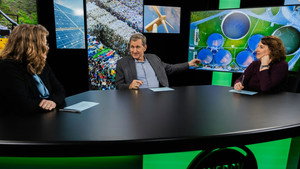
Beyond incinerators, “waste to energy” now means capturing methane, or natural gas, from landfills. It can also mean using digesters and gasifiers to make methane, compost and biochar, while redirecting waste streams and creating jobs. We discuss this with Julia Levin, who runs the Bioenergy Association of California, and Christine McKiernan, Head Technical Officer for SJI Renewable Energy.
Episode 10
Geoengineering
Dec 29, 202627m
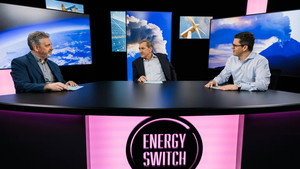
Engineered solutions to reduce warming could be as simple as planting trees or as controversial as injecting huge volumes of aerosols into the stratosphere to cool the planet, raising complex political and ethical questions. We discuss this with Dr. Gernot Wagner of Columbia Business School and Dr. Stephen Gardiner, Professor of Ethics at the University of Washington, both authors on the subject.